
Digimon Story: Time Stranger – A Monster-Taming Adventure
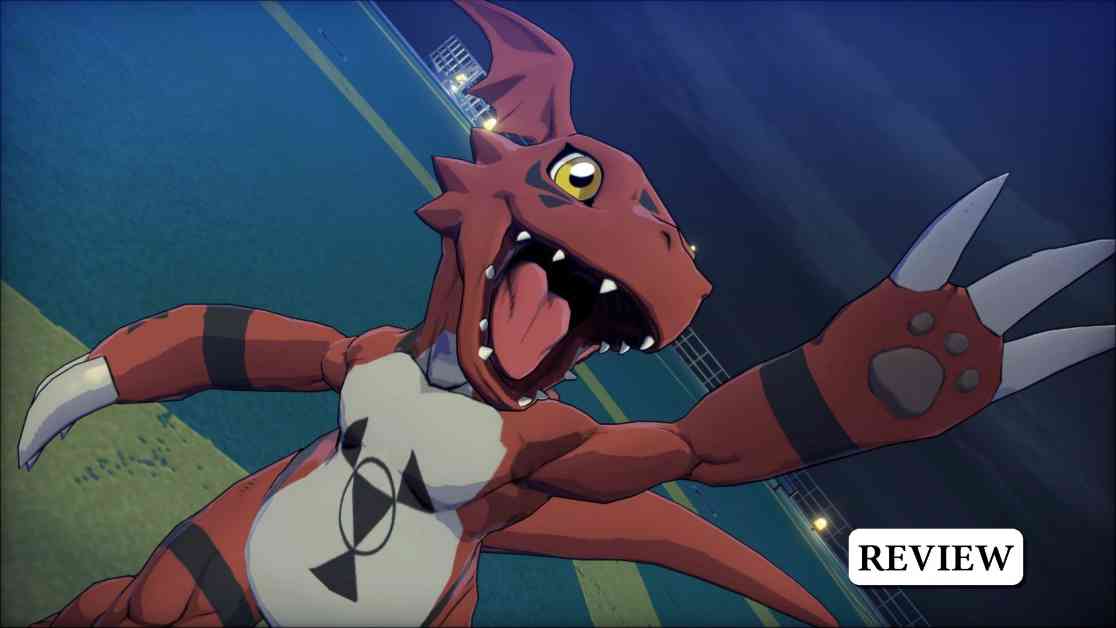
Digimon Story: Time Stranger feels like a season of the monster-taming anime made playable. I don’t just mean in the sense that it shows humans and digital monsters banding together to save their respective worlds of reality and a digital simulacra, but that it ebbs and flows from mundane slice-of-life to devastating melodrama. Sadly, those contrasts in tone are often matched by contrasts in quality, with the game’s exceptional moments often sandwiched between less compelling ones. Time Stranger oscillates between what feels like slow-burning filler and an angsty, tragic disaster story that centers the digital monsters you meet, train, and befriend over the course of your journey. For almost 30 years now, I’ve consistently admired Digimon’s desire to make sure that the digital monsters are just as much people as the humans who tame them. That same inclination is woven into the mechanics of what, without it, could easily have been a rote turn-based RPG. Like a good friendship, Time Stranger is an investment you have to be willing to make, enduring its awkward early moments to get to the raw and sappy center. It’s worth it. Like most Digimon stories, Time Stranger is fairly separate from any of the previous games, though its lore and mythology will be familiar to anyone who’s been on this ride for a while. You are an agent of an organization called ADAMAS, which investigates strange digital anomalies in the human world, only for one mission to end up with far more dire consequences than you or your superiors could have anticipated. As Digimon begin to spill out into the human world, a giant, humanoid machine descends upon Japan. The ensuing conflict creates a cataclysmic explosion that wipes out everyone in its path…except for you, who miraculously survives but is thrown eight years in the past. The world is headed toward apocalyptic ruin, unless you can stop the disaster set to happen in eight years.
Time Stranger: A Tale of Time Travel and Friendship
As the name implies, Time Stranger is a time travel story, and its timeline-hopping is one of the biggest contributors to its sometimes uneven pacing, with long stretches feeling oddly disconnected from what you were just doing, until they’re very suddenly not. Time Stranger wades into well-worn “fix the past to save the future” tropes until it takes some surprising left turns that reveal it to be a far more elaborate story than it initially appears. The script often betrays the story with awkward, unnatural, and overexpository dialogue, but the emotional heartbeat is still pulsating underneath that stilted delivery. The main trio consists of your agent and a pair of stragglers ADAMAS suspects may be at the center of the incoming apocalypse: the faun-like Digimon Aegiomon and his tamer, Inori.
For much of Time Stranger, the player is a voyeur to their growing partnership, but as the party’s time-traveling antics gradually become more complicated and everyone is more invested in their success, those bonds may end up endangering everyone. Aegiomon’s childlike gusto and need to save those he cares about are the unchecked and unrestrained catalysts for so much of Time Stranger, to the point where he, rather than the agent, is arguably the main character. But I still found my role in the whole story compelling, as it was my duty as an agent that was constantly at odds with the pair’s loyalty to one another. Time Stranger knows the power of friendship conquers all, but it is also such a powerful, untamable force that it threatens to unravel the same ties that strengthen it. Everyone in this game is looking for somewhere to belong, and they’re willing to take it from even the most imperfect of places.


