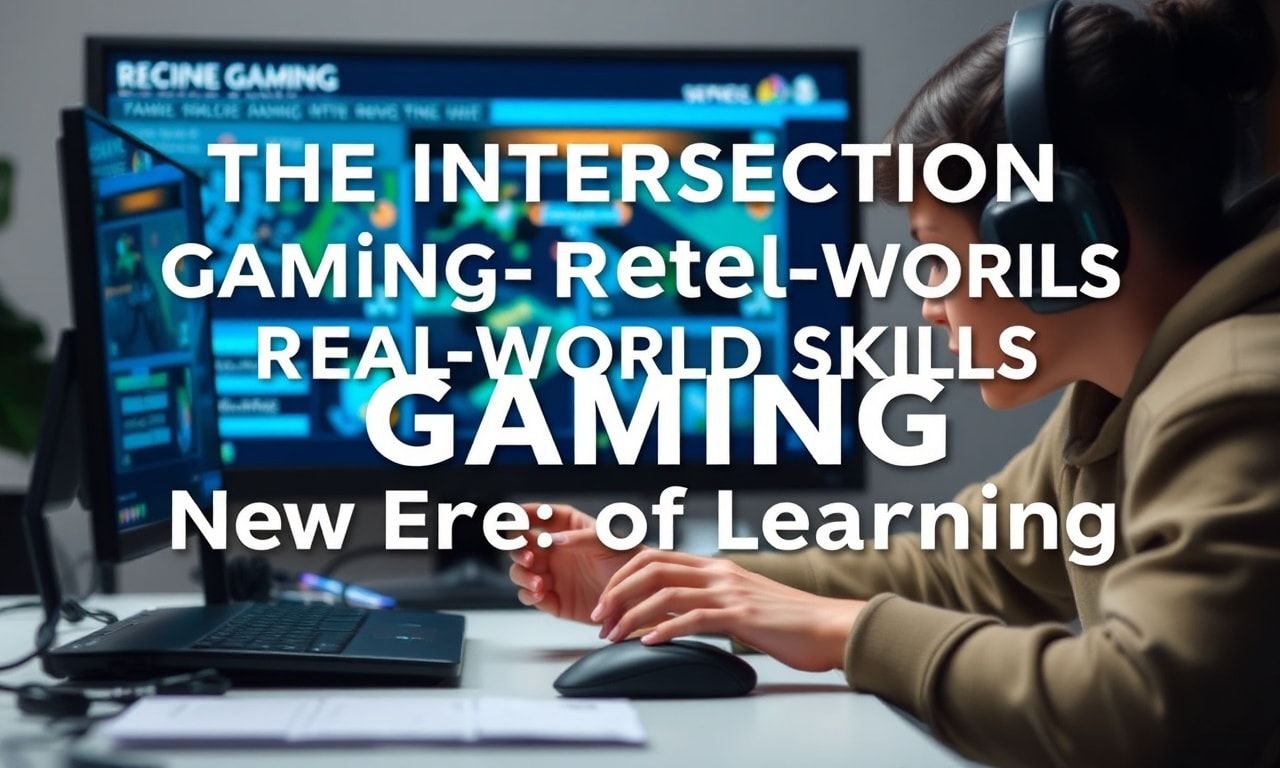
The Evolution of Gaming
The gaming industry has come a long way since its inception. From simple pixelated graphics to immersive virtual realities, games have evolved into complex ecosystems that offer more than just entertainment. Today, gaming is a multi-billion-dollar industry that influences various aspects of our lives, including education and professional development.
Gaming and Skill Development
Recent studies have shown that gaming can enhance cognitive abilities, improve problem-solving skills, and even boost creativity. Games that require strategic planning and quick decision-making can help players develop critical thinking skills that are valuable in real-world scenarios. For instance, games like Minecraft encourage players to build and create, fostering creativity and innovation.
Moreover, multiplayer games that require teamwork and collaboration can improve social skills and communication. Players learn to work together, share ideas, and coordinate actions to achieve common goals. These skills are not only beneficial in gaming but also in professional settings where teamwork is essential.
The Role of Esports
Esports, or competitive gaming, has gained significant traction in recent years. Professional gamers are now recognized as athletes, and esports tournaments attract millions of viewers worldwide. The rise of esports has created new career opportunities, from professional gaming to event management and commentary.
Esports teams often function like traditional sports teams, with coaches, trainers, and support staff. This structure provides a unique environment for learning and skill development. Players learn discipline, time management, and the importance of continuous practice and improvement.
Gaming and Education
The educational potential of gaming is being increasingly recognized. Educational games and simulations are being used to teach subjects ranging from history to science. These games make learning interactive and engaging, helping students retain information more effectively.
For example, games like Kerbal Space Program teach players about physics and aerospace engineering through interactive gameplay. Similarly, historical games like Assassin’s Creed Odyssey incorporate real-world historical events and figures, providing an immersive learning experience.
Real-World Applications
Gaming skills are not just confined to the virtual world. Many industries are now looking for individuals with gaming experience. For instance, the healthcare industry uses simulations to train surgeons and medical professionals. These simulations provide a safe environment for practicing complex procedures without real-world consequences.
In the field of architecture and design, games like SimCity and Cities: Skylines help players understand urban planning and resource management. These skills are directly transferable to real-world projects, making gamers valuable assets in these industries.
Community and Collaboration
Gaming communities are vibrant and diverse, offering a platform for collaboration and knowledge sharing. Players often come together to solve complex problems, share strategies, and support each other. This sense of community can be beneficial for personal growth and professional networking.
For those interested in home improvement and DIY projects, online communities like Kodin korjausvinkit Espoossa 2026 provide a wealth of information and resources. These communities showcase how gaming skills can be applied to real-world tasks, fostering a culture of continuous learning and improvement.
The Future of Gaming
The future of gaming looks promising, with advancements in technology like virtual reality (VR) and augmented reality (AR) set to revolutionize the industry. These technologies offer immersive experiences that blur the line between the virtual and real worlds, opening up new possibilities for learning and skill development.
As gaming continues to evolve, its impact on education and professional development will likely grow. The skills and experiences gained through gaming can prepare individuals for the challenges of the future, making gaming an integral part of modern life.