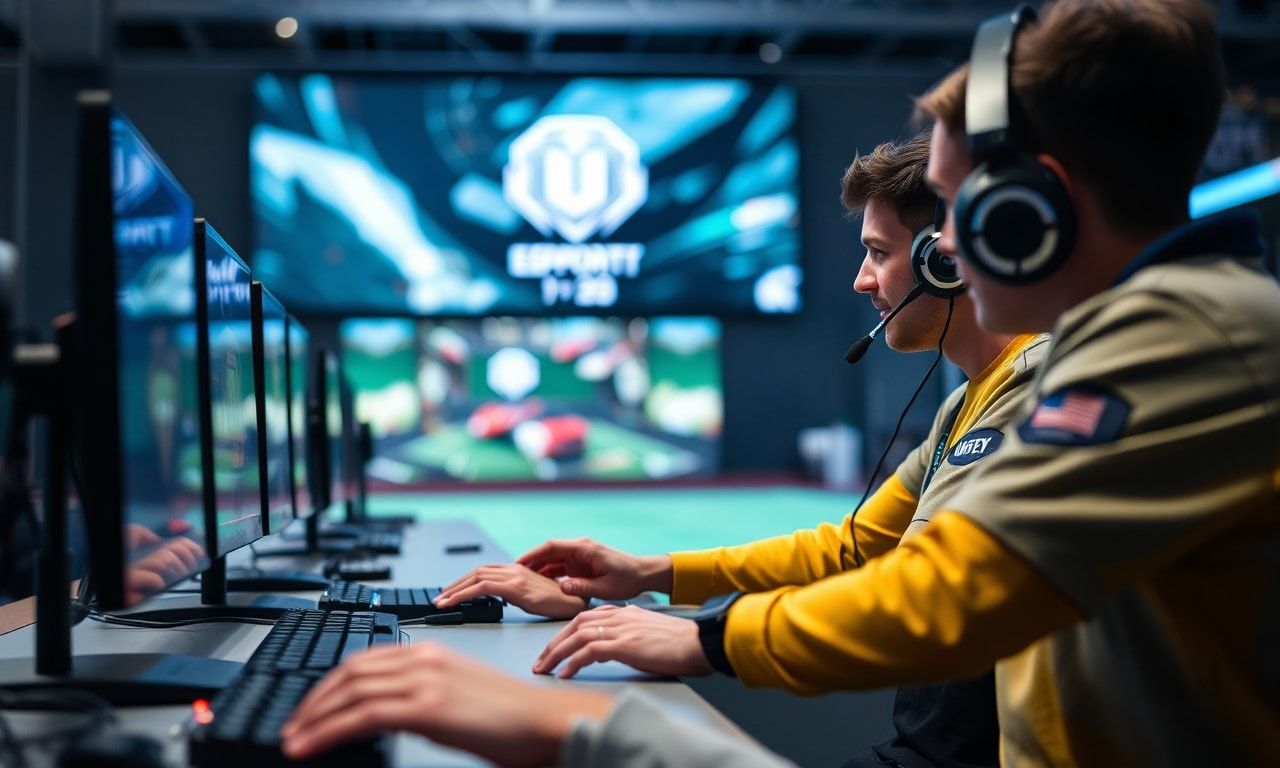
The Rise of Esports
The world of sports has witnessed a seismic shift with the meteoric rise of esports. What began as a niche hobby has evolved into a global phenomenon, drawing millions of viewers and generating billions in revenue. Esports, or competitive video gaming, has transcended its origins to become a mainstream spectacle, complete with professional leagues, sponsorships, and dedicated arenas.
Major tournaments like The International for Dota 2 and the League of Legends World Championship attract viewers comparable to traditional sports events. The International 2021, for instance, had a prize pool exceeding $40 million, underscoring the financial stakes and the seriousness with which esports is taken. This surge in popularity has prompted traditional sports organizations to take notice and explore collaborations or even investments in the esports arena.
The Blurring Lines Between Esports and Traditional Sports
The lines between esports and traditional sports are becoming increasingly blurred. Many traditional sports teams and leagues have established their own esports divisions or franchises. The NBA, for example, has the NBA 2K League, where teams mirror their real-world counterparts. Similarly, the English Premier League has seen clubs like Manchester City and West Ham United invest in esports teams, competing in games like FIFA.
This convergence is not just limited to professional teams. Colleges and universities are also recognizing the importance of esports, offering scholarships and establishing varsity teams. The National Association of Collegiate Esports (NACE) has grown rapidly, providing a structured environment for student athletes to compete in games like League of Legends, Overwatch, and Rocket League.
The Impact on Viewership and Engagement
The rise of esports has also impacted how audiences engage with sports content. Traditional sports viewership has seen a decline among younger demographics, who are more inclined towards digital and interactive content. Esports, with its dynamic and fast-paced nature, offers a different kind of thrill that resonates with this audience.
Platforms like Twitch and YouTube Gaming have played a pivotal role in this shift. These platforms allow viewers to watch live esports events, interact with streamers, and even participate in the action through chat and donations. The interactivity and community aspect of esports have created a unique viewing experience that traditional sports are now trying to emulate.
The Role of Technology
Technology has been a driving force behind the growth of esports. Advances in graphics, processing power, and internet connectivity have enabled the creation of highly immersive and competitive gaming environments. Virtual reality (VR) and augmented reality (AR) are also beginning to play a role, offering new ways for fans to experience esports.
Moreover, the integration of data analytics and artificial intelligence (AI) has enhanced the strategic depth of esports. Teams now use data to analyze player performance, develop strategies, and gain a competitive edge. This mirrors the use of analytics in traditional sports, where data-driven decisions have become the norm.
The Future of Esports and Traditional Sports
The future of esports and traditional sports is likely to be one of coexistence and collaboration. Traditional sports organizations are increasingly recognizing the value of esports in reaching younger audiences and diversifying their revenue streams. Conversely, esports organizations are looking to traditional sports for structure, legitimacy, and investment.
For instance, the Overwatch League has adopted a franchise model similar to traditional sports leagues, with teams based in specific cities and playing in a centralized arena. This model has helped to legitimize esports and attract traditional sports investors. Similarly, the partnership between the NFL and EA Sports for the Madden NFL franchise has brought esports into the mainstream, with the Madden NFL Championship Series offering significant prize pools and exposure.
The Global Landscape
The global landscape of esports is diverse and rapidly evolving. Regions like North America, Europe, and East Asia are at the forefront, with established leagues and a strong fan base. However, other regions are quickly catching up, with countries like Brazil, South Korea, and China investing heavily in esports infrastructure and talent.
In Europe, the rise of esports has been particularly notable. Cities like Berlin, Paris, and London have become hubs for esports events, attracting international teams and fans. The European Esports League (EEL) and other regional leagues are providing a platform for local talent to compete at the highest level. For those interested in following the latest developments in European sports, including esports, Dublin sports news today live offers comprehensive coverage and updates.
Challenges and Opportunities
Despite its rapid growth, esports faces several challenges. Issues like player burnout, the lack of standardized regulations, and the need for better mental health support are areas that need attention. Additionally, the esports industry must continue to innovate to keep up with changing technologies and audience preferences.
However, the opportunities are vast. The global esports market is projected to reach $1.8 billion by 2022, with sponsorships, advertising, and media rights contributing significantly to this growth. The integration of esports into traditional sports can also open up new avenues for collaboration and innovation, benefiting both industries.
Conclusion
The intersection of esports and traditional sports represents a new era of competition and collaboration. As both industries continue to evolve, the lines between them will likely become even more blurred. For fans, this means more diverse and engaging content, while for organizations, it offers new opportunities for growth and innovation. The future of sports is not just about physical prowess but also about digital skill, strategy, and community engagement. As we move forward, the synergy between esports and traditional sports will shape the landscape of competition and entertainment for years to come.
In the realm of international football connections, a unique bond between Berlin and Dublin is explored in unexpected football ties, offering readers an intriguing perspective on current sporting relations.
Delving into the heart of community engagement, local football leagues unite neighbors in a way that transcends the game itself.