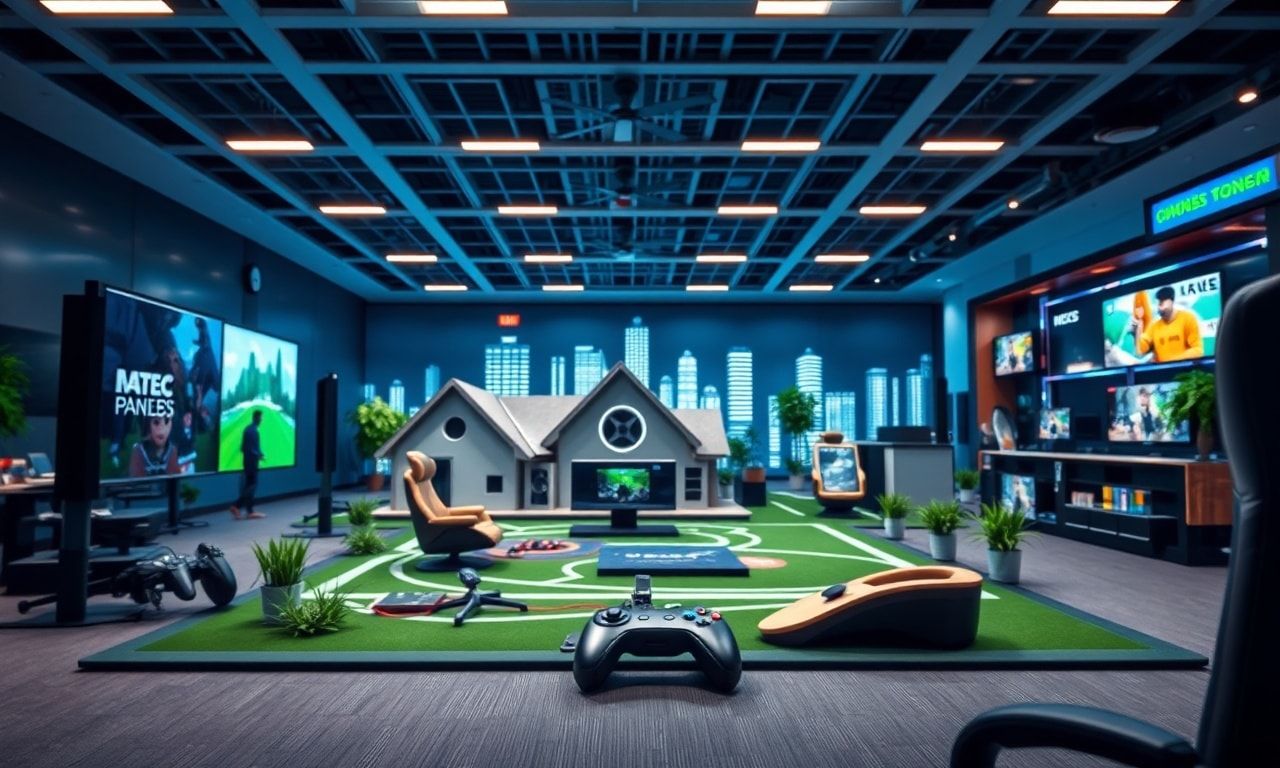
The Rise of Gaming in Modern Culture
The gaming industry has seen exponential growth over the past decade, evolving from a niche hobby to a mainstream cultural phenomenon. With advancements in technology, gaming has become more immersive and realistic, attracting a diverse audience. This shift has not only impacted entertainment but has also influenced other sectors, including real estate. As gamers spend more time in virtual worlds, the lines between digital and physical spaces are blurring, leading to innovative trends in property and investment.
Virtual Real Estate and Its Impact on Gaming
Virtual real estate has become a significant aspect of the gaming world, particularly in multiplayer online games and virtual reality (VR) platforms. Players can buy, sell, and develop virtual properties, creating a thriving digital economy. This trend has sparked interest among investors and developers, who see the potential for monetization and engagement. The concept of virtual real estate is not limited to gaming; it extends to social media platforms and metaverse environments, where users can own and customize their digital spaces.
One of the key drivers of this trend is the increasing demand for personalized and immersive experiences. Gamers and non-gamers alike are looking for ways to express their creativity and establish a presence in virtual worlds. This has led to the development of sophisticated tools and platforms that allow users to design and build their own virtual properties. As a result, the virtual real estate market is expected to grow significantly in the coming years.
The Role of Blockchain Technology
Blockchain technology has played a crucial role in the development of virtual real estate. By providing a secure and transparent way to transfer ownership and manage transactions, blockchain has enabled the creation of a decentralized marketplace for digital properties. This has opened up new opportunities for investors and developers, who can now buy, sell, and trade virtual assets with confidence.
In addition to facilitating transactions, blockchain technology has also enabled the creation of non-fungible tokens (NFTs), which represent unique digital assets. NFTs have become a popular way to buy and sell virtual real estate, as they provide a verifiable proof of ownership. This has led to the emergence of new business models and investment strategies, as well as a growing community of collectors and enthusiasts.
The Influence of Gaming on Physical Real Estate
The impact of gaming on real estate is not limited to the virtual world. The increasing popularity of gaming has also influenced the physical real estate market, particularly in terms of property development and investment. Developers are now designing buildings and communities with gamers in mind, creating spaces that cater to the needs and preferences of this growing demographic.
For example, some developers are incorporating gaming-inspired features into their designs, such as interactive walls, augmented reality (AR) experiences, and smart home technologies. These features not only enhance the living experience but also attract potential buyers and tenants. Additionally, the rise of esports has led to the development of dedicated gaming facilities and arenas, which have become popular destinations for both gamers and spectators.
Moreover, the gaming industry has created new opportunities for real estate investors. With the increasing demand for gaming-related properties, investors can now diversify their portfolios by investing in gaming centers, esports venues, and other related assets. This has led to the emergence of new investment strategies and business models, as well as a growing market for gaming-related real estate.
The Future of Gaming and Real Estate
The future of gaming and real estate looks promising, with several trends and innovations on the horizon. As technology continues to evolve, the boundaries between virtual and physical spaces will become increasingly blurred, leading to new opportunities and challenges for both industries.
One of the key trends to watch is the development of the metaverse, a virtual universe where users can interact, socialize, and conduct business. The metaverse is expected to have a significant impact on the real estate market, as users will be able to buy, sell, and develop virtual properties within this immersive environment. This will create new opportunities for investors, developers, and entrepreneurs, as well as a growing demand for virtual real estate.
Another trend to watch is the increasing integration of gaming and real estate in the physical world. As gaming becomes more mainstream, developers and investors will continue to explore new ways to incorporate gaming elements into their projects. This could include the development of gaming-inspired communities, the use of AR and VR technologies in property marketing, and the creation of interactive and immersive living spaces.
Conclusion
The intersection of gaming and real estate is a fascinating and rapidly evolving trend that is reshaping both industries. As gamers continue to spend more time in virtual worlds, the demand for virtual real estate will grow, creating new opportunities for investors and developers. At the same time, the influence of gaming on physical real estate will continue to expand, leading to the development of innovative and immersive living spaces.
For those looking to invest in real estate, whether virtual or physical, it is essential to stay informed about the latest trends and developments in the gaming industry. By understanding the impact of gaming on real estate, investors can make informed decisions and capitalize on the growing opportunities in this exciting and dynamic market. For more insights and strategies on real estate investment, consider exploring resources like ev satın almak için en iyi stratejiler.
To gain a comprehensive understanding of the latest trends, we recommend exploring Turkey’s housing market developments and their implications.
In light of recent discussions on sustainable living, our latest feature improving homes and lifestyles offers practical advice for readers looking to make positive changes.
As housing markets continue to shift, our latest feature, global housing trends explained, offers an in-depth analysis of current patterns and future projections.