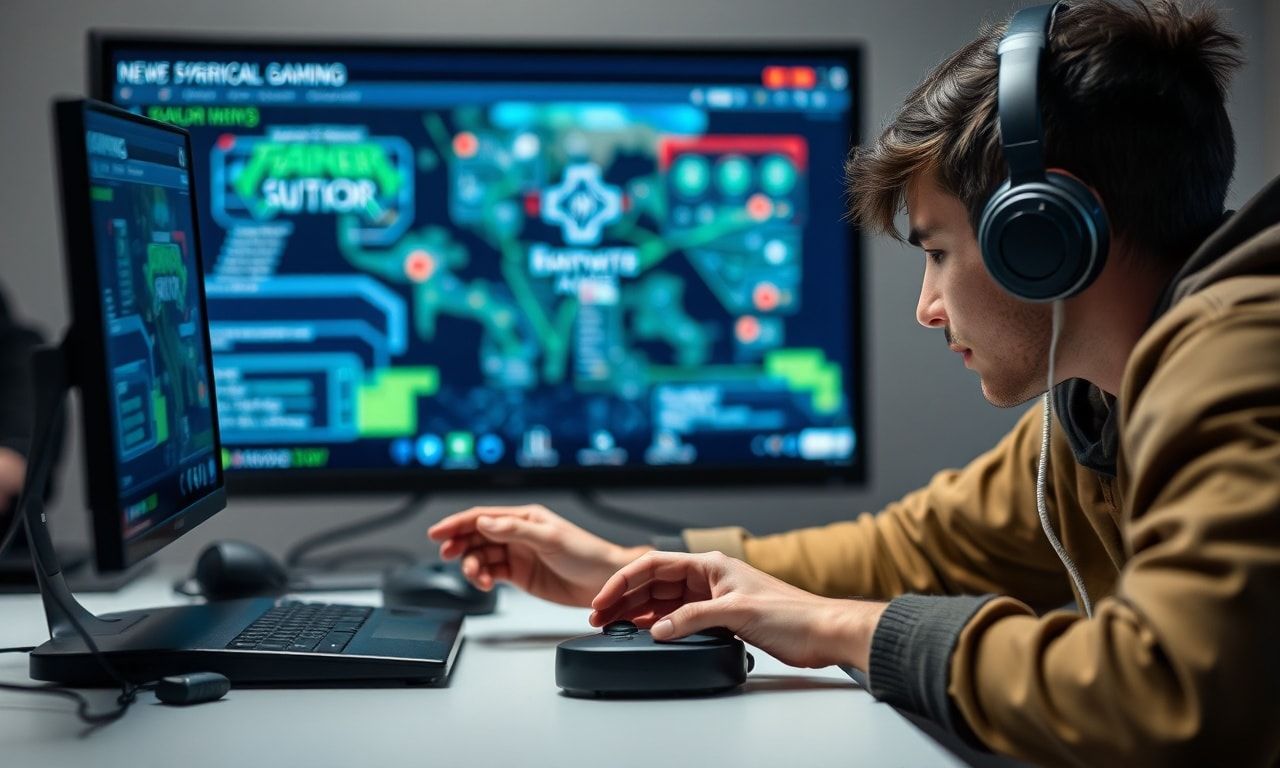
The Evolution of Gaming: Beyond Entertainment
The gaming industry has undergone a remarkable transformation over the past few decades. What was once considered a mere pastime has evolved into a multi-billion-dollar industry that influences various aspects of our lives. Today, gaming is not just about entertainment; it’s about education, problem-solving, and even addressing real-world issues. This shift has opened up new avenues for gamers to contribute to society in meaningful ways.
Gaming as a Tool for Education and Training
One of the most significant developments in the gaming world is its application in education and training. Educational games, often referred to as ‘edutainment,’ are designed to make learning more engaging and interactive. These games cover a wide range of subjects, from mathematics and science to history and language learning. For instance, games like ‘Kerbal Space Program’ teach players about physics and aerospace engineering, while ‘Civilization’ offers a deep dive into history and strategy.
Moreover, gaming has become an invaluable tool in professional training. Simulations and virtual reality (VR) games are used to train pilots, surgeons, and even military personnel. These games provide a safe and controlled environment where individuals can practice and hone their skills without real-world consequences. The immersive nature of gaming allows for realistic scenarios that can be tailored to specific learning objectives.
Problem-Solving and Critical Thinking
Gaming also plays a crucial role in developing problem-solving and critical thinking skills. Many games require players to analyze situations, devise strategies, and make decisions under pressure. This process enhances cognitive abilities and fosters a mindset that is adept at tackling complex problems. For example, puzzle games like ‘Portal’ and ‘The Witness’ challenge players to think outside the box and find creative solutions to intricate puzzles.
Furthermore, multiplayer games encourage teamwork and collaboration. Players must communicate effectively, coordinate their actions, and work together to achieve common goals. This collaborative aspect of gaming translates well into real-world scenarios, where teamwork and communication are essential for success. Whether it’s in the workplace, on the sports field, or in community projects, the skills honed through gaming can be invaluable.
Gaming for Social Good
In recent years, the gaming community has increasingly focused on using its platform for social good. Gamers have organized charity events, raised funds for various causes, and even developed games that address social issues. For instance, games like ‘Life is Strange’ and ‘That Dragon, Cancer’ tackle emotional and psychological challenges, raising awareness and fostering empathy among players.
Additionally, gaming has been used to address real-world problems such as climate change, poverty, and health crises. For example, the game ‘Eco’ allows players to build a sustainable society while managing resources and environmental impact. This not only educates players about the importance of sustainability but also encourages them to take action in their own lives. Similarly, games like ‘Foldit’ have been used to solve complex scientific problems, such as protein folding, by leveraging the collective intelligence of gamers.
Exploring the Cultural Impact of Gaming
Gaming has also become a significant cultural phenomenon, influencing art, music, and literature. The stories and characters in games often reflect and comment on societal issues, providing a unique perspective on the human experience. For those interested in delving deeper into the cultural impact of gaming, resources like ilginç bilgiler genel kültür offer a wealth of information and insights. These platforms highlight the intersection of gaming with various cultural and historical contexts, enriching the overall gaming experience.
The cultural impact of gaming is further evident in the rise of esports. Competitive gaming has gained mainstream recognition, with professional gamers achieving celebrity status and tournaments drawing millions of viewers. This has not only elevated the status of gaming as a legitimate sport but also created new opportunities for careers and entertainment. The global esports industry continues to grow, with major events like The International and the League of Legends World Championship becoming cultural touchstones.
The Future of Gaming: Innovations and Opportunities
Looking ahead, the future of gaming is brimming with possibilities. Advances in technology, such as virtual reality, augmented reality, and artificial intelligence, are set to revolutionize the gaming experience. These innovations will make games more immersive, interactive, and personalized, offering players unprecedented levels of engagement. For example, VR technology allows players to step into the game world, providing a sense of presence and immersion that traditional gaming cannot match.
Moreover, the integration of AI in gaming will enable the creation of more dynamic and responsive game environments. AI can adapt to players’ actions and preferences, creating unique and personalized experiences. This not only enhances the enjoyment of the game but also opens up new avenues for storytelling and gameplay mechanics. As technology continues to evolve, the potential for gaming to impact various aspects of our lives will only grow.
Conclusion
The gaming industry has come a long way from its humble beginnings. Today, it is a powerful tool for education, problem-solving, and social good. The intersection of gaming with real-world issues highlights its potential to drive positive change and foster a more informed and engaged society. As we look to the future, the possibilities are endless, and the impact of gaming will continue to be felt in numerous aspects of our lives. Whether you’re a casual gamer or a seasoned pro, there’s no denying that gaming is more than just a pastime—it’s a transformative force in our world.