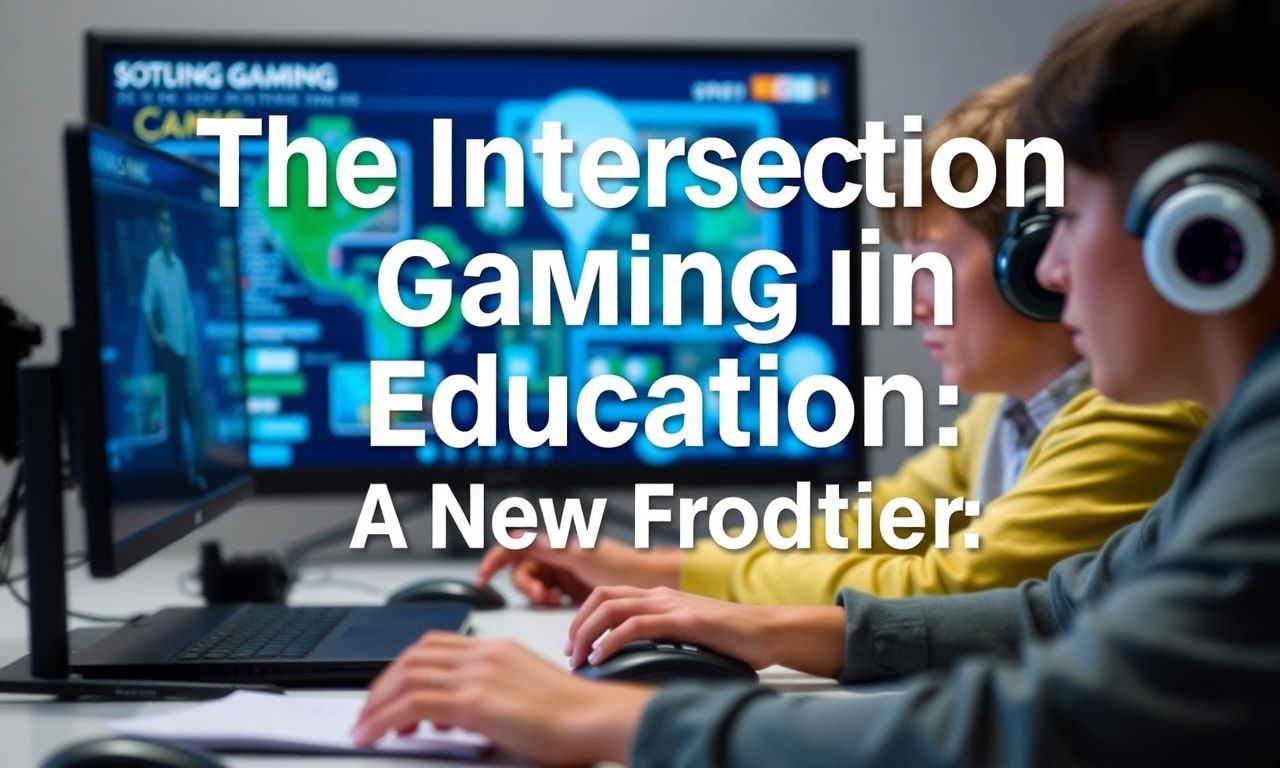
The Evolution of Gaming in Education
The gaming industry has seen unprecedented growth over the past few decades, evolving from simple pixelated graphics to immersive virtual realities. This evolution has not only transformed the entertainment sector but has also made significant inroads into the education sector. The integration of gaming elements into educational platforms has been a game-changer, offering interactive and engaging ways to learn. This shift has been particularly notable in the context of school news education, where educators are increasingly leveraging gaming to enhance student engagement and learning outcomes.
The Benefits of Gamification in Education
Gamification, the application of game-design elements and game principles in non-game contexts, has been widely adopted in educational settings. The benefits are manifold, including increased motivation, better retention of information, and improved problem-solving skills. For instance, educational games can turn complex subjects into engaging puzzles, making learning more enjoyable and effective. Additionally, these games often provide immediate feedback, allowing students to understand their mistakes and learn from them in real-time. This interactive approach has been shown to boost student performance and foster a more dynamic learning environment.
Case Studies and Success Stories
Several case studies highlight the success of integrating gaming into education. For example, Minecraft: Education Edition has been used in classrooms worldwide to teach subjects ranging from history to computer science. Students can build historical landmarks, simulate scientific experiments, and collaborate on projects, all within a virtual environment. Similarly, platforms like Kahoot! have revolutionized classroom quizzes, making them more interactive and fun. These success stories demonstrate the potential of gaming to transform traditional educational methods and make learning more accessible and engaging.
Challenges and Considerations
Despite the numerous benefits, the integration of gaming into education is not without its challenges. One significant concern is the potential for distraction. While educational games are designed to be engaging, there is a risk that students may become more focused on the game itself rather than the educational content. Additionally, not all students have equal access to the technology required for gaming, which can exacerbate existing educational inequalities. Educators must carefully balance the use of gaming to ensure it enhances learning without compromising academic rigor or accessibility.
The Future of Gaming in Education
The future of gaming in education looks promising, with advancements in technology paving the way for even more innovative educational tools. Virtual reality (VR) and augmented reality (AR) are set to play a significant role, offering immersive learning experiences that were previously unimaginable. For instance, VR can transport students to historical events or scientific phenomena, providing a firsthand understanding of complex concepts. AR, on the other hand, can overlay digital information onto the real world, making learning more interactive and contextually relevant. As these technologies become more accessible, their integration into educational curricula is expected to grow, further enhancing the learning experience.
Conclusion
The intersection of gaming and education represents a new frontier with immense potential. By leveraging the engaging and interactive nature of games, educators can create more dynamic and effective learning environments. However, it is crucial to address the challenges and ensure that gaming is used as a tool to enhance, rather than replace, traditional educational methods. As technology continues to evolve, the possibilities for gaming in education are limitless, promising a future where learning is not only informative but also enjoyable and engaging.
As news consumption continues to evolve, understanding these shifts is crucial for both journalists and readers alike; explore the changes in news consumption trends today.