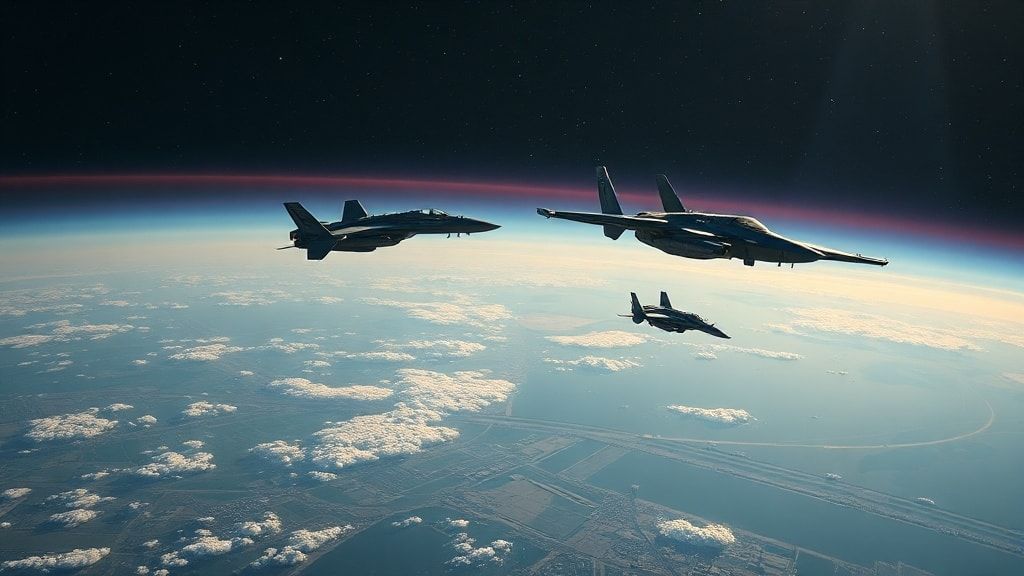
Space is no longer the silent void reserved for scientific discovery and peaceful exploration. It has turned into the latest arena of intense strategic competition where nations and corporations race to stake their claim. The stakes have never been higher—control over satellite networks, access to valuable resources, and dominance of orbital pathways are now as vital as any terrestrial battlefield. This transformation is not just driven by geopolitical ambitions but also by technological leaps that redefine what is possible beyond Earth’s atmosphere.
Amid these developments, a fascinating parallel emerges in the realm of gaming, notably with the OGame Elite Game, where players engage in their own cosmic struggles, reflecting real-world tensions in a strategic simulation of power and resource management. These games provide a lens into the complexities that real-world actors face in this expanding frontier.
As this article unfolds, readers will uncover how new alliances are shifting, groundbreaking technologies reshape strategies, and the implications extend far beyond immediate conflicts—challenging humanity’s future in space. Understanding these dynamics is essential for grasping the rapidly evolving reality of space strategy today.
The New Frontier: Why Space Has Become the Ultimate Battleground
Space has transitioned from the realm of science fiction to a tangible domain of strategic competition. Governments and private entities alike are racing to secure their positions beyond Earth’s atmosphere, recognizing that control over space assets has profound implications for national security, economic dominance, and technological superiority.
- 🌌 Space assets support global communications and navigation, vital for civilian and military operations.
- 🚀 Satellites facilitate real-time intelligence, surveillance, and reconnaissance capabilities.
- 🎯 Controlling orbital pathways can limit adversaries’ access to critical infrastructure.
As tensions rise on this new battleground, the vulnerability of satellites and other space-based technologies is becoming glaringly evident. Cyberattacks, anti-satellite weaponry, and jamming techniques threaten not only military endeavors but also everyday activities reliant on space technology. This shift has spurred nations to develop doctrines and capabilities tailored to space warfare, altering how conflicts might unfold on a global scale.
| Aspect | Traditional Warfare | Space Warfare |
|---|---|---|
| Operational Domain | Land, Sea, Air | Orbiting space, beyond atmosphere |
| Key Assets | Troops, Tanks, Aircraft | Satellites, Space Stations, Probes |
| Threats | Missiles, Cyber, Physical attacks | Anti-satellite weapons, jamming, hacking |
Interestingly, the rise of strategy games like the Explore OGame Online simulation reflects this growing public fascination with space conflict dynamics. Players engage in managing resources and defenses in virtual space wars, mirroring real-world challenges faced by states and agencies aiming to maintain dominance.
💡 Pro Tip: Understanding the evolving strategies in space can offer insight into broader geopolitical trends and help policymakers anticipate the moves of rival powers.
Power Players and Secret Alliances: Who's Really Pulling the Cosmic Strings?
When it comes to the unfolding strategic conflicts in space, the lineup of power players extends well beyond traditional national agencies. While NASA, ESA, and Roscosmos remain central to space exploration and policy, emerging private enterprises and lesser-known state actors have carved out significant influence on the cosmic stage. These entities often form covert alliances and partnerships, combining resources and intelligence to amplify their reach.
- 🎯 Nations are increasingly leveraging commercial space companies to expand their capabilities without direct government expenditure.
- 🔑 Secretive collaborations between countries and private firms help share advanced technology while maintaining plausible deniability in sensitive operations.
- 💡 Space strategy games like OGame Guerre Jeu simulate complex interstellar diplomacy, reflecting real-world alliance-building tactics.
Take, for example, the growing partnerships between the U.S., Japan, and several European countries, pooling satellite technologies and launch capacities to counterbalance China’s rapidly expanding space ambitions. Meanwhile, Russia’s alliances with nations like India showcase a blend of tactical cooperation and strategic competition. Each relationship is a calculated move to control orbital paths, secure resource rights, and dominate communication networks.
| Player | Primary Focus | Notable Alliances |
|---|---|---|
| United States | Military and Commercial Space | Japan, EU |
| China | Orbital Control and Lunar Exploration | Russia (partially), private firms |
| Russia | Launch Services and Satellite Networks | India, China (limited) |
| Private Companies | Commercial and Technological Innovation | Various state contracts |
Understanding these dynamics is essential for analyzing who is truly pulling the cosmic strings. It’s not just about budgets or rocket launches; it’s the subtle interplay of secret alliances and shared ambitions shaping each maneuver. Strategic games like OGame War Space provide a functional parallel, helping enthusiasts grasp the complexity behind international space relations with an element of competitive simulation.
💡 Pro Tip: Watching the cooperation patterns in space exploration and defense can reveal emerging geopolitical shifts long before they surface publicly.
Tech Wars: How Cutting-Edge Innovations Are Redrawing Space Strategy
The rapid advancement of space technology is fundamentally altering how nations and private entities approach extraterrestrial dominance. Innovations in satellite miniaturization, propulsion systems, and AI-driven space situational awareness are not just enabling more ambitious missions—they are reshaping strategic priorities altogether. For example, the surge in small satellite constellations has created a new battlefield in space, where control over data streams and networked assets becomes as vital as physical presence.
- 💡 Invest in AI-powered analytics for real-time threat detection
- 💡 Develop resilient satellite architectures to survive cyber and kinetic attacks
- ⚡ Prioritize interoperability among allied space assets for coordinated defense
Of particular note, the integration of autonomous systems allows for rapid decision-making in scenarios once limited by communication delays. This agility grants operators a competitive edge, transforming space from a static domain into a dynamic theater of constant flux. It’s no surprise that emerging doctrines emphasize speed, flexibility, and electronic warfare capabilities. For those curious about how strategic gameplay translates into real-world space dominance, resources like OGame War Space strategies detailed here offer intriguing parallels between virtual conquest and actual space tactics.
| Technology | Strategic Advantage | Potential Challenges |
|---|---|---|
| Small Satellite Swarms | Distributed resilience, rapid deployment | Collision risk, signal interference |
| AI & Autonomous Control | Faster response, adaptive tactics | Ethical concerns, system vulnerabilities |
| Advanced Propulsion | Extended mission range, maneuverability | Development cost, reliability issues |
Policymakers and military strategists face tough questions: how to harness these technologies while minimizing escalation risks? The answer may lie in balancing offensive and defensive innovations without triggering a destabilizing arms race. But one thing is clear—ignoring cutting-edge tech is no longer an option for aspiring space powers. The future is being written at the intersection of silicon and stardust.
💡 Pro Tip: Staying ahead in space strategy means continuous investment in technology experimentation alongside robust international dialogue to establish norms and reduce misunderstandings in this still nascent domain.
From Earth to Orbit: The Stakes for Nations and Corporations Alike
The race to dominate space is no longer confined to national space agencies. Corporations and private entities now play a significant role, shaping strategies that extend from Earth’s surface to the vast orbital arenas above. Governments recognize space as a critical domain for national security—control of satellites means control of communications, navigation, and surveillance capabilities that impact both military and civilian life.
However, the stakes are equally high for corporations, especially those investing in satellite constellations for internet services or mining ventures on asteroids. The industry’s growth prompts a new set of challenges and conflicts—some overt, others subtle—as multiple stakeholders maneuver for influence in a domain where traditional laws and boundaries are still being defined. This dynamic interplay is changing the rules of engagement in space, a phenomenon explored in detail in the analysis titled अंतरिक्ष की नई लड़ाई: जब nations and corporations confront their ambitions in orbit.
- 🎯 Strengthening satellite cybersecurity is essential to protect critical infrastructure.
- ✅ Developing norms for sustainable space operations can reduce collision risks.
- ⚡ Expanding partnerships between nations and corporations accelerates innovation but requires clear governance.
- 💡 Investing in debris mitigation technologies safeguards future missions.
Here’s a quick glance at how interests diverge and converge:
| Stakeholder | Primary Objectives | Challenges |
|---|---|---|
| Government Agencies | National security, strategic dominance, international diplomacy | Budget constraints, geopolitical tensions, arms race risks |
| Private Corporations | Commercial profits, technological leadership, market expansion | Regulatory uncertainty, liability concerns, competition for orbits |
| International Entities | Peaceful cooperation, space traffic management, resource sharing | Enforcement difficulties, conflicting national interests, slow policy progress |
As the push expands beyond Earth’s atmosphere, the question becomes not only who controls space but how these overlapping ambitions are balanced. OGame War Space illustrates the complexity of this evolving contest—where every satellite launched carries the weight of national pride and corporate strategy, making space a battlefield as consequential as any on Earth.
💡 Pro Tip: Monitoring developments in space governance frameworks helps anticipate shifts in which actors gain advantage as technologies and treaties evolve.
Charting the Unknown: What These Battles Mean for Humanity’s Future in Space
The ongoing strategic contests in space are more than mere demonstrations of national prowess—they’re precursors to humanity’s broader role among the stars. As agencies and private entities push forward with missions and technologies, these battles highlight the challenges of securing space assets while managing the risks of conflict beyond Earth. This evolving arena demands new frameworks for cooperation and competition, blending military, economic, and diplomatic efforts.
- 🚀 Understand that space resources could reshape economic models globally.
- 🌐 Recognize the importance of international treaties in mitigating conflict risks.
- 🔭 Stay curious about how emerging technologies influence space strategy.
- 🛰️ Appreciate the dual-use nature of space technologies—both civilian and military.
- 📡 Follow developments in space situational awareness to anticipate future tensions.
One compelling example that resonates beyond real-world conflict is the OGame War Space experience, which vividly simulates the complexities of space warfare and resource management. By engaging with such simulations, enthusiasts and strategists alike gain insights into the balance between offensive maneuvers and strategic diplomacy—elements that could soon unfold in reality. This convergence of gaming and strategy offers a window into the potential dynamics of space conflict and collaboration.
| Aspect | Traditional Military Conflict | Space Strategy Implications |
|---|---|---|
| Environment | Terrestrial, well-mapped | Harsh, vast, largely uncharted |
| Speed of Engagement | Minutes to hours | Seconds to minutes |
| Assets at Risk | Land, sea, air forces | Satellites, space stations, communication networks |
| International Impact | Localized to regional/global scales | Global, impacting communication and navigation worldwide |
| Legal Framework | Established conventions and treaties | Emerging norms and agreements |
Amidst these considerations, the interplay between conflict and cooperation will shape humanity’s future trajectory in space. What happens next could determine whether space becomes a realm of sustainable exploration or a new domain of rivalry. As governments calibrate their strategies, the stakes include not only national security but also the preservation of space as a shared environment.
💡 Pro Tip: Engaging with realistic simulations like OGame War Space can deepen understanding of space strategy nuances, providing a practical lens on the complexities ahead.
Final Frontiers and Unseen Challenges
As space increasingly becomes a stage for strategic maneuvering, the interplay between nations, corporations, and emerging technologies reveals more than just competition — it exposes a complex web of ambition, caution, and uncharted opportunity. From secret alliances to publicly declared endeavors, the stakes transcend mere possession of celestial assets; they signal a profound shift in how humanity views its place beyond Earth. The infusion of cutting-edge innovations doesn’t just change the tools with which space is contested; it redefines what’s possible and what might be at risk. Whether it’s safeguarding communication infrastructures or pioneering new resource frontiers, the consequences reach all corners of society. What remains clear is that the ongoing cosmic chess game is not reserved for governments alone—corporate players wield increasing influence, and the outcomes could well determine the future of life and security on Earth. As efforts intensify, the question is no longer if but how humanity will balance ambition with responsibility. Will the race to dominate outer space foster collaboration or ignite conflict? Only time will tell, but one thing is certain: those following the saga of OGame War Space are witnessing the dawn of a new era, where the final frontier is as much about strategy as it is about exploration.
Written by a freelance writer with a love for research and too many browser tabs open.
For more insights on this topic, you might find Inside the Rise of Instant Strategy particularly informative.